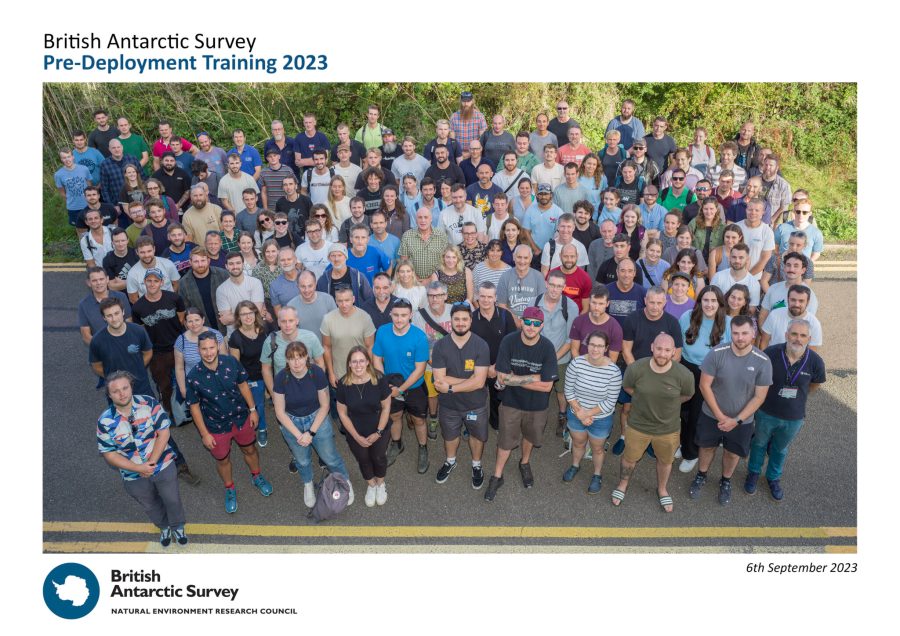
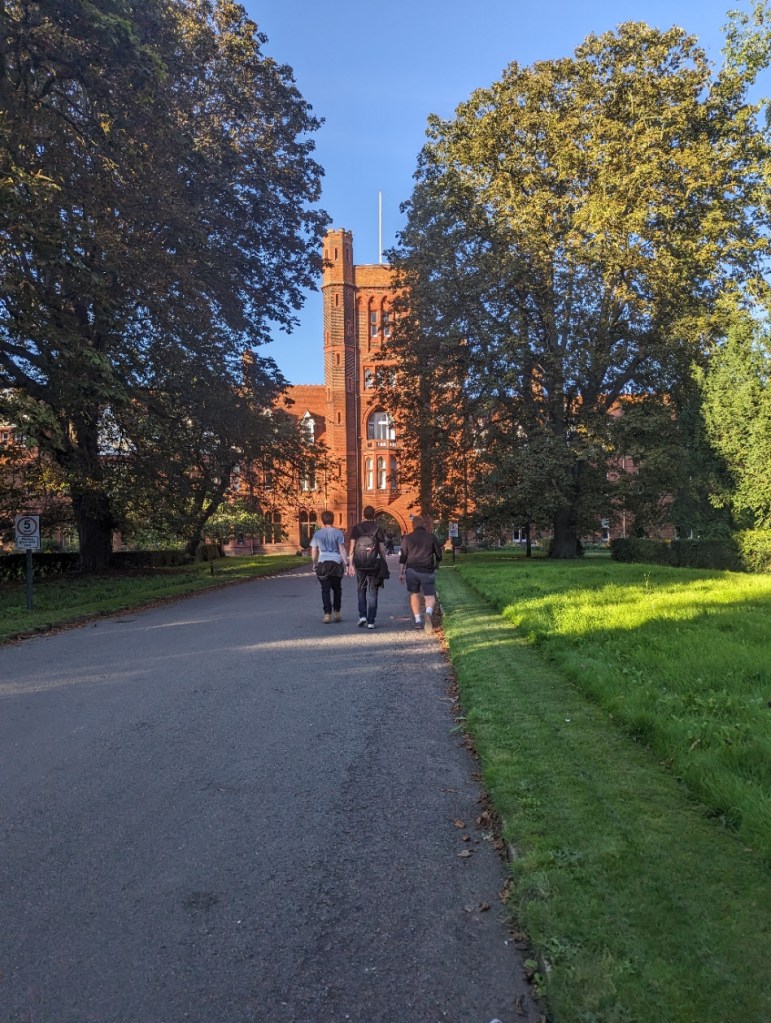
3rd September 2023 – I pulled anxiously into Girton College, Cambridge, here I will undertake what is known as ‘Pre Deployment Training’ for the British Antarctic Survey. I was hastily checked into my accommodation – and sent into a grand library for accreditation and mugshots to be taken! The place had incredible arches and polished wooden book cupboards.. it all felt very ‘Hogwarts’… First mistake made – telling my new boss I hadn’t actually watched any of those films and a barrage of abuse has begun.


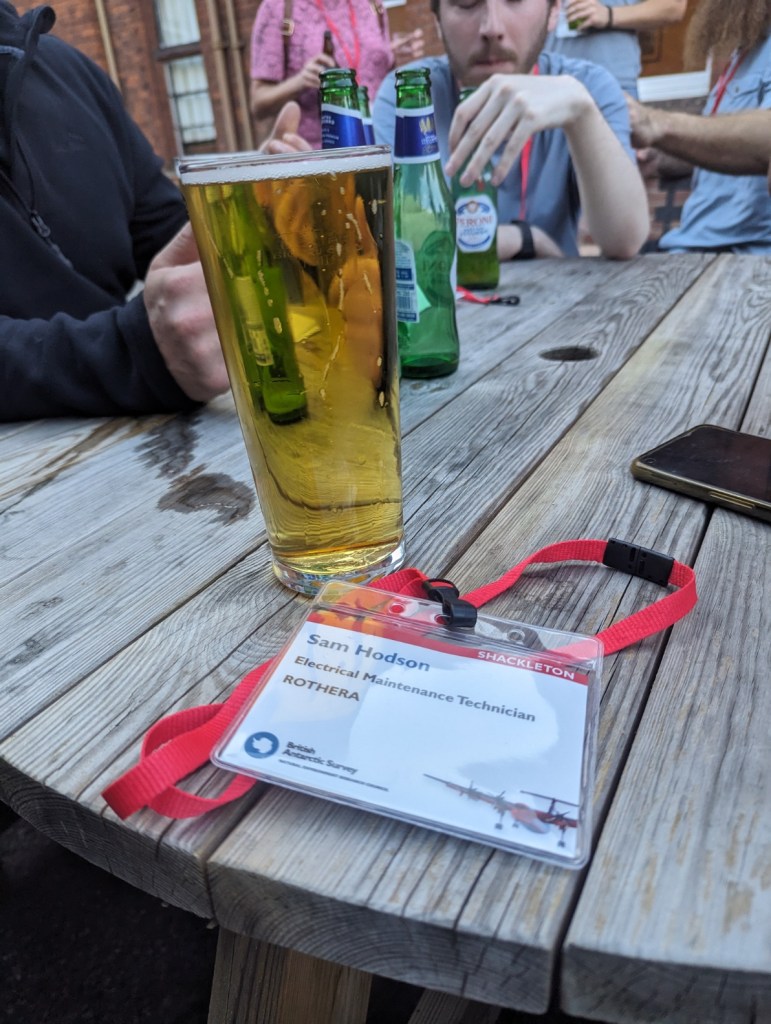
An evening meal soon followed in the grand dining hall in which I began to find realise the grand scale of the operation and the amount of personnel required to keep stations running… slowly and surely I found the people I’d be working amongst – against best practice a late night followed entailed ready for an early start at BAS headquarters.
Nicknames started coming about as we learnt more about one another and the roles they’d be doing, intertwined with stories of previous adventures and how they’d come to be here!
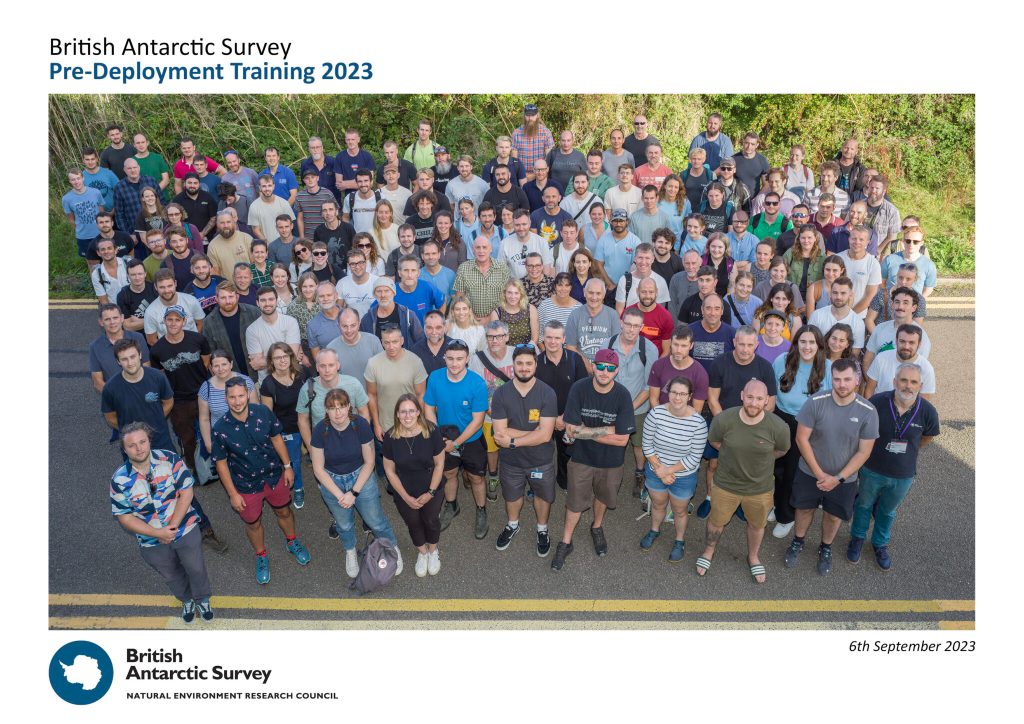
Each morning we’d walk to BAS and filter into the building to start lectures and practical tasks to familiarise us with some aspects of station life. We had talks from Home Office, the Environment and Biosecurity Office, Antarctic Clothing , HR and station specific seminars to introduce us to where we’d be living and who with.

As the week progressed we had a full schedule to attend to – many talks on life down south and many workshops to bring the culture of respect on base to our attention. Full days completing Mental Health Awareness training and fire extinguisher training took part outside in the 33 degrees heatwave we were experiencing. Ice creams became you best friend as you sat through long afternoons in sweltering classrooms dreaming of the snowy scenes shown endlessly on presentations. A warm welcome to the British Antarctic Survey was in full swing… The evenings contained BBQ’s and a Ceilidh if you wasn’t already hot enough!
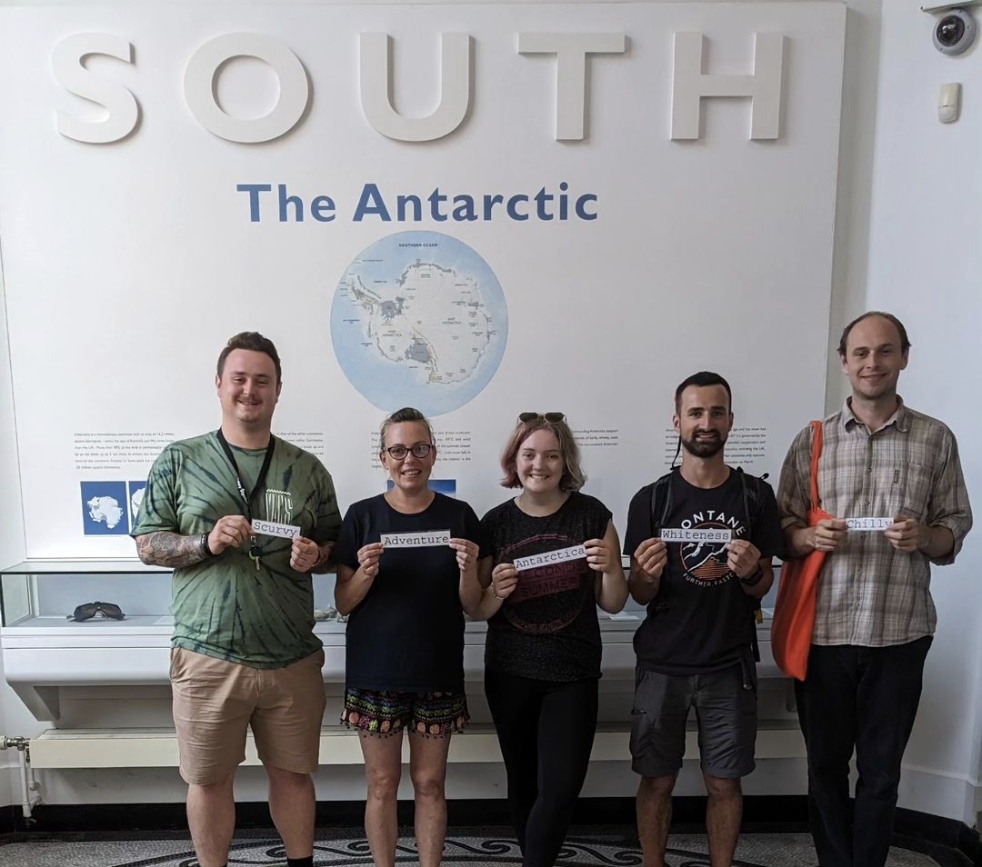
Trips were made into Cambridge – bookshops, beers and brunch ensued as we visited many of the museums – a highlight being the Scott Polar Research Institute – of course a favourite for all those interested in exploration of the polar regions. It was a huge relief to see the equipment and clothing improvements since the golden age of exploration – although many were dreading the ‘Kit Fitting’ we all had – due to having to get changed into ALL of our polar layers we’d be wearing in the Antarctic climate… A perfect task to undertake in the heat we were facing! Truth be told – it was super exciting to given all the layers/safety equipment and endless gloves … it all started to get very real!
As the week rolled on – we headed rapidly towards our PST course – A course designed to prepare you for an emergency whilst at sea – we spent the morning in a classroom learning about many techniques to sustain life at sea and how to get rescued.

We donned immersion suits and got into a pool (well needed, the temp peaked at 33 in Norwich) we did lifejacket drills and got into the water… from here we had endless tasks to perfect including singlehandedly flipping a life raft onto its right side and how to stay afloat as a group and tread water together. It was a great exercise and it now means I can travel on the Sir David Attenborough ship!
The time in Cambridge ended for me with a full day First Aid Course – one that was delivered by BASMU – British Antarctic Survey Medical Unit. It was a full day of learning how to deal with pretty much every scenario that could arise in a polar environment. This was no St Johns Ambulance course and soon we were splinting legs with poles and learning about all the different painkillers that we’d be familiar with… lots of choking exercises, classic CPR drills and getting to use defibrillators. Hopefully none of this will ever be utilised but being so remote and on average 7-10 days before Medevac becomes possible.. these skills would at least make you more comfortable.
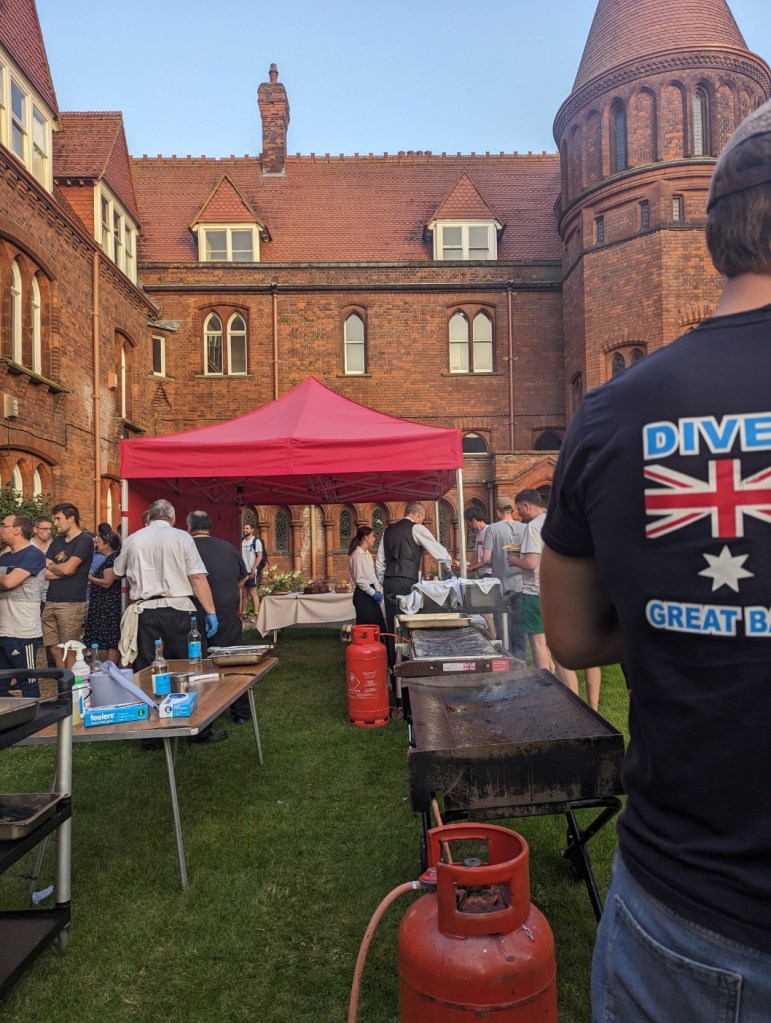
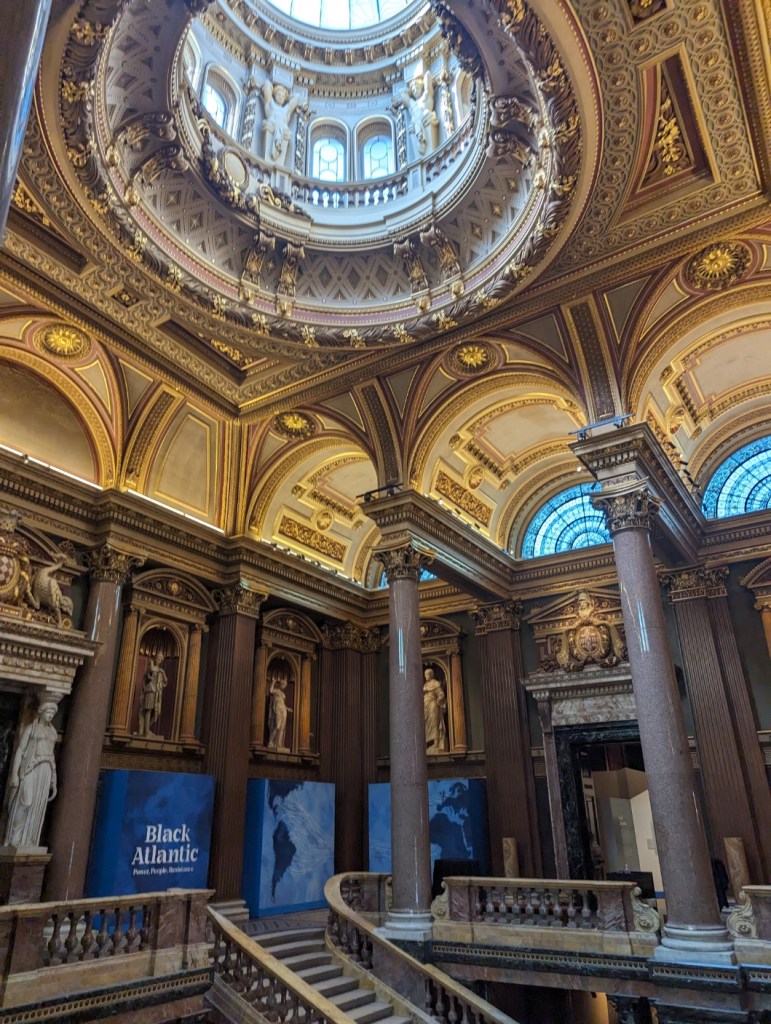

The final night was bittersweet, bidding farewell to all those you wouldn’t see until you were ‘below 60’ and on base at Rothera Research Station. Many of my new friends would be wintering and spending between 12-18 months on base and therefore had another week of intense job specific training.
Leaving Cambridge and BAS knowing more about the adventure, the job and the people I was going to spend the foreseeable with, I could not smile any less as I look forward to experience life amongst the ice.



 An Antarctic Memoir